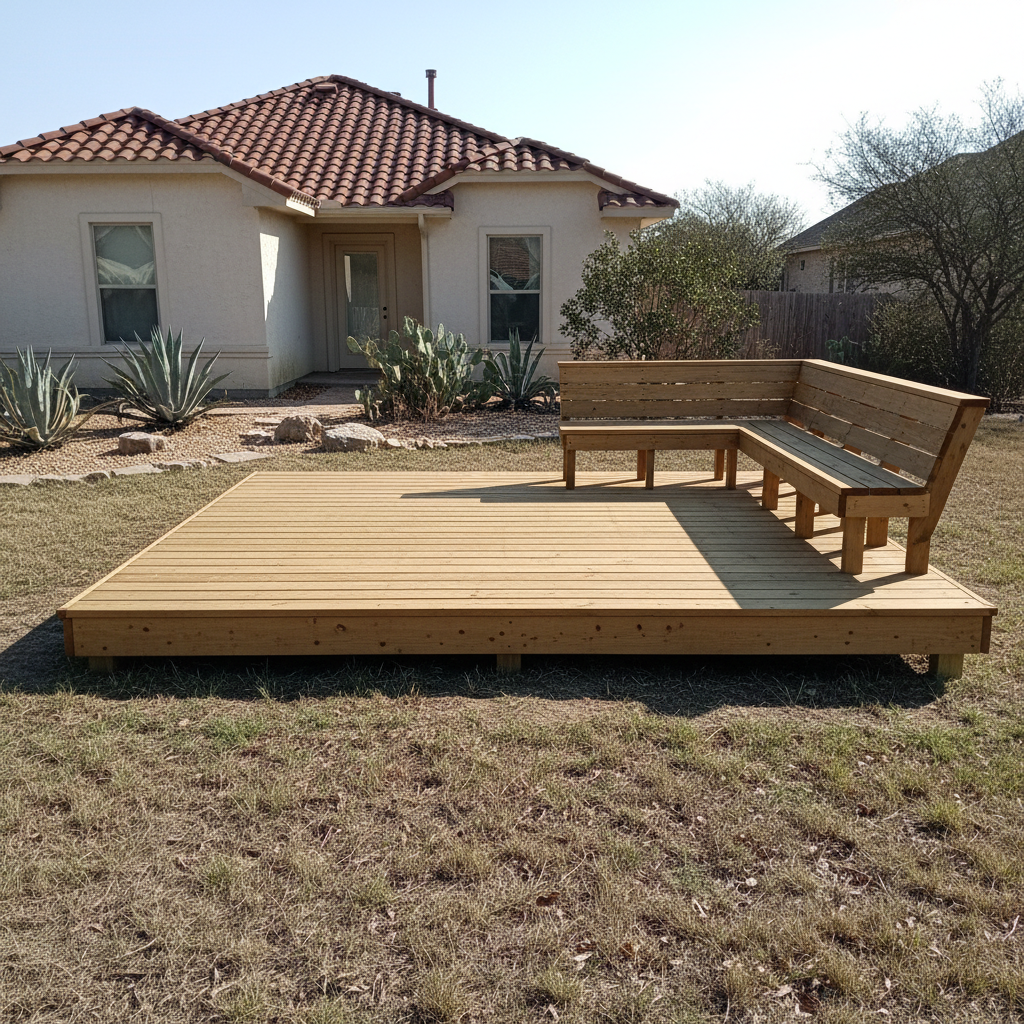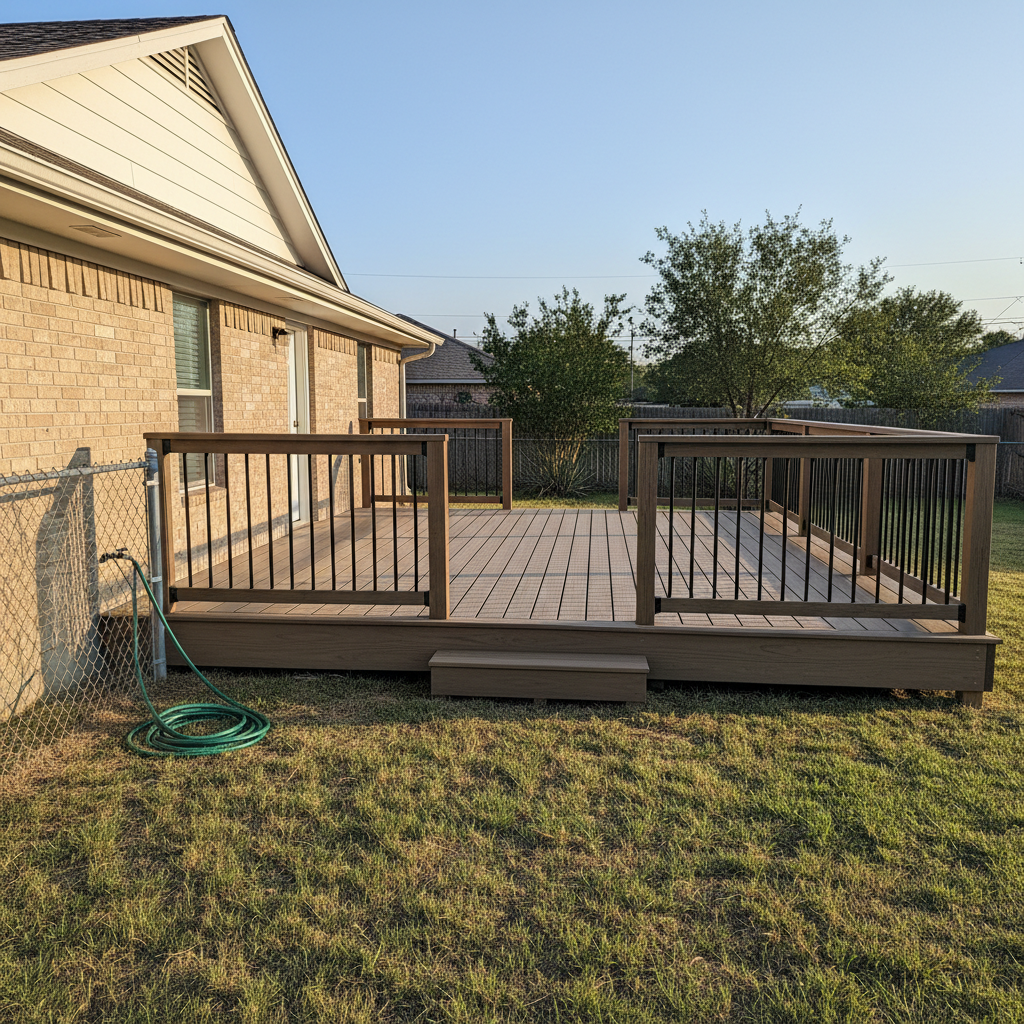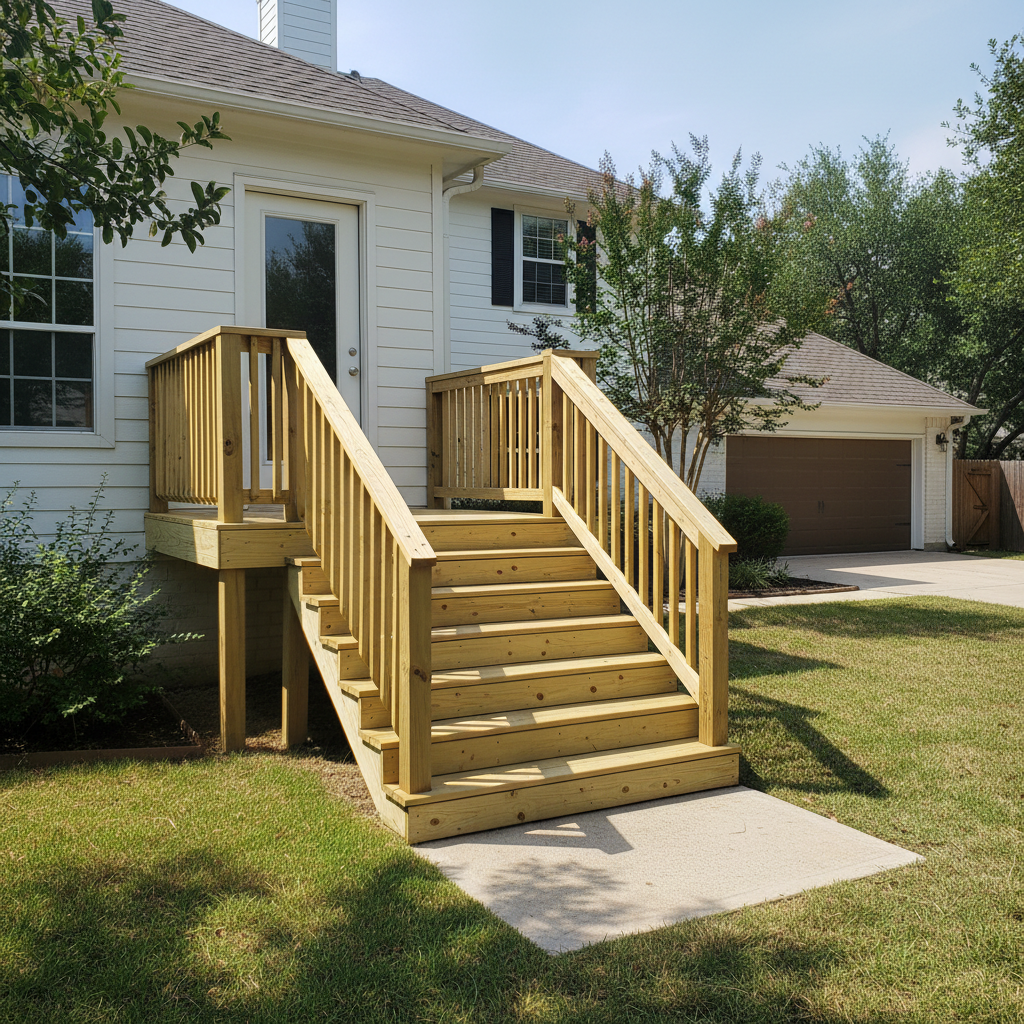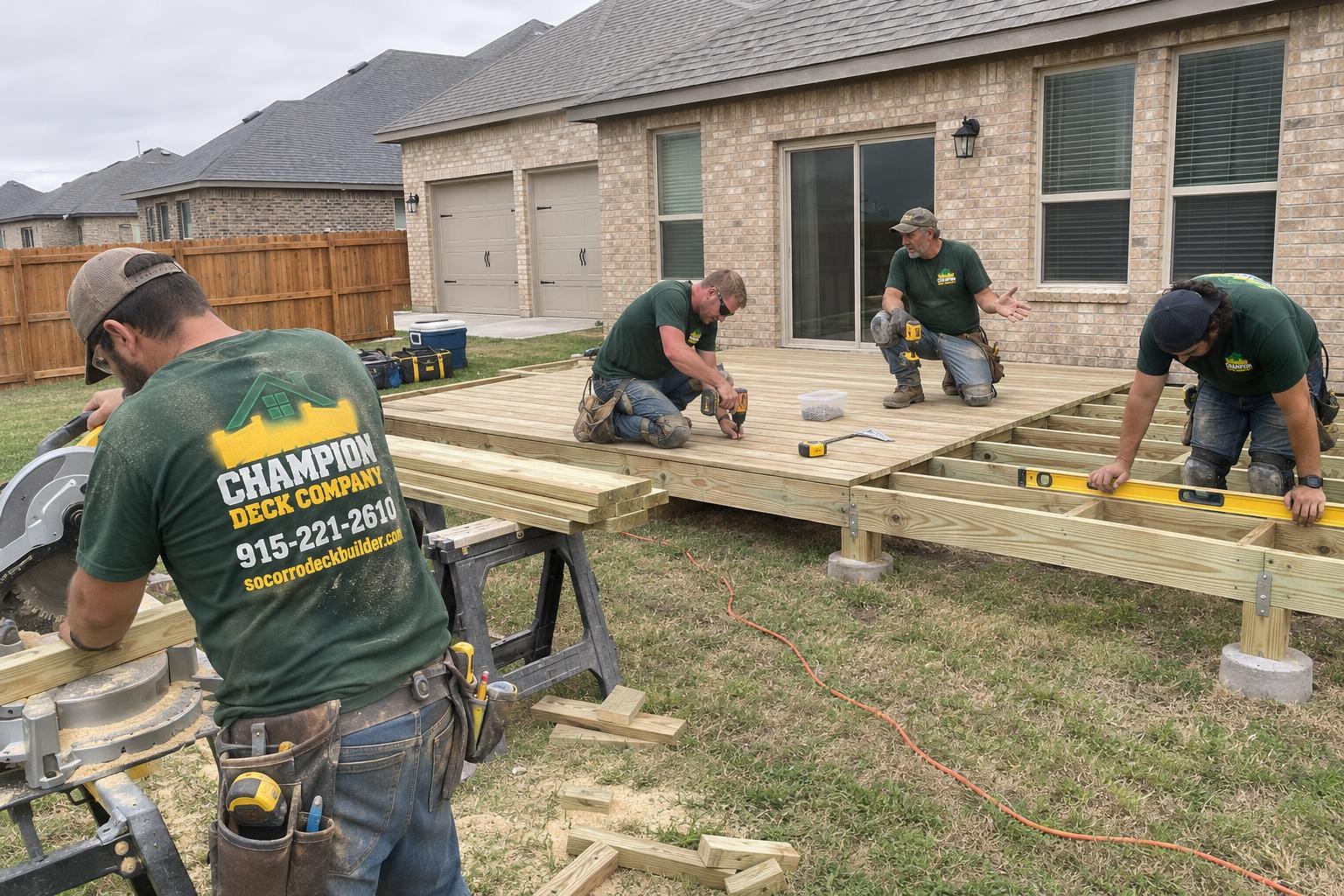
We build and repair decks, nothing else, which means we've seen just about every way a deck can fail in this climate. Most of us got into this trade through general framing and carpentry before narrowing down to decks specifically. We work on everything from a small platform off a mobile home to a full wraparound deck on a two-story house.
The thing homeowners usually worry about is rot, a soft spot near the house where the ledger board meets the siding, or a railing that's started to lean. That failure almost always traces back to water getting behind the ledger board or a footing that wasn't set deep enough for our soil. We flash every ledger, bolt instead of screw where it matters, and set footings based on what the ground actually does here, not just the minimum code depth.
None of this is complicated. It is mostly just doing what we said we would do.
Every job is covered by insurance in case a board slips or a tool damages something nearby. Ask for proof before you sign anything, any contractor worth hiring will have it ready.
We walk the site, measure, and write out what the materials and labor actually cost. No verbal estimate that changes once the lumber's delivered.
We don't hand your job off to a rotating list of subcontractors. The guys framing your deck are the same ones who gave you the quote.
Composite costs more up front but never needs staining. Pressure-treated pine is cheaper but you're resealing it every two or three years in this sun, and we'll tell you that straight.
A typical deck takes a few days once the footings cure, and we'll give you a real start date, not a vague window. If wind or rain pushes us back a day, you'll hear it from us before you notice it yourself.
We know what the caliche soil around here does to footings and how the summer sun treats untreated lumber. That's not something a crew driving in from out of town picks up overnight.
Questions about who you'd actually be hiring.
Free estimate, a price in writing, and work we stand behind.